Thought For The Day

Thought For The Day

Monday, 25 May 2015

Online Learning Resorces


INSTRUCTIONS:
In group you are to prepare an online learning resource that can be access freely by others.
The resources should contain:
  1. content based on the form 4 or form 5 chemistry syllabus. Choose 1 topic.
  2. pictures, links and hyperlink to word documents and videos for related concepts
  3. examples, activities and exercises
  4. videos, simulations or animations, etc.
For this assignment, I paired with Umi Nur Izzeti Azhar again to prepare an online learning resource. We created free webpage as the online learning resource through www.weebly.com
We chose topic 7 in Form 4 chemistry syllabus which is "Periodic Table" as our main topic for this assignment. You may surf on http://theperiodictablechemistry.weebly.com to have a look on this.

In the webpage, we have prepared each topic with 

Week 11

Date: 16th May 2015


The last presentation was presented by Noranisya and Arshna Melati. They introduced us how to use some features such as calculation and graphing tools in Microsoft Excel. 


It allows me to manipulate, manage and analyze data efficiently. Microsoft Excel gives me the right tools to enable me to accomplish all my needs. 


Week 10

Date: 9th May 2015


On the 10th week, my partner and I presented how to use Windows Live Movie Maker. Windows Live Movie Maker is essentially a simple, easy to use video editor that helps us put together photos, videos, music and special effects to create an eye-catching presentation in a few easy steps. 

I hope all the class members can understand and be able to help them using this software after this. I also add up question and answer session so that if they have any problems regarding this software, they can raise up. 

Week 7

Date: 18th April 2015


Athiletchumy and Sugitha have presented for sixth software which is Microsoft Office Publisher. I never get used this software before. So, they taught us how to make brochures, business cards, and greeting cards. Just a simple thing but if we make it creative, then it will be so nice and attractive.

By using this software, we can create newspapers, newsletters, magazines, flyers, invitations and many more.

All of class members tried to follow and create their own brochure, business card and greeting card. 

Week 6

Date: 11th April 2015


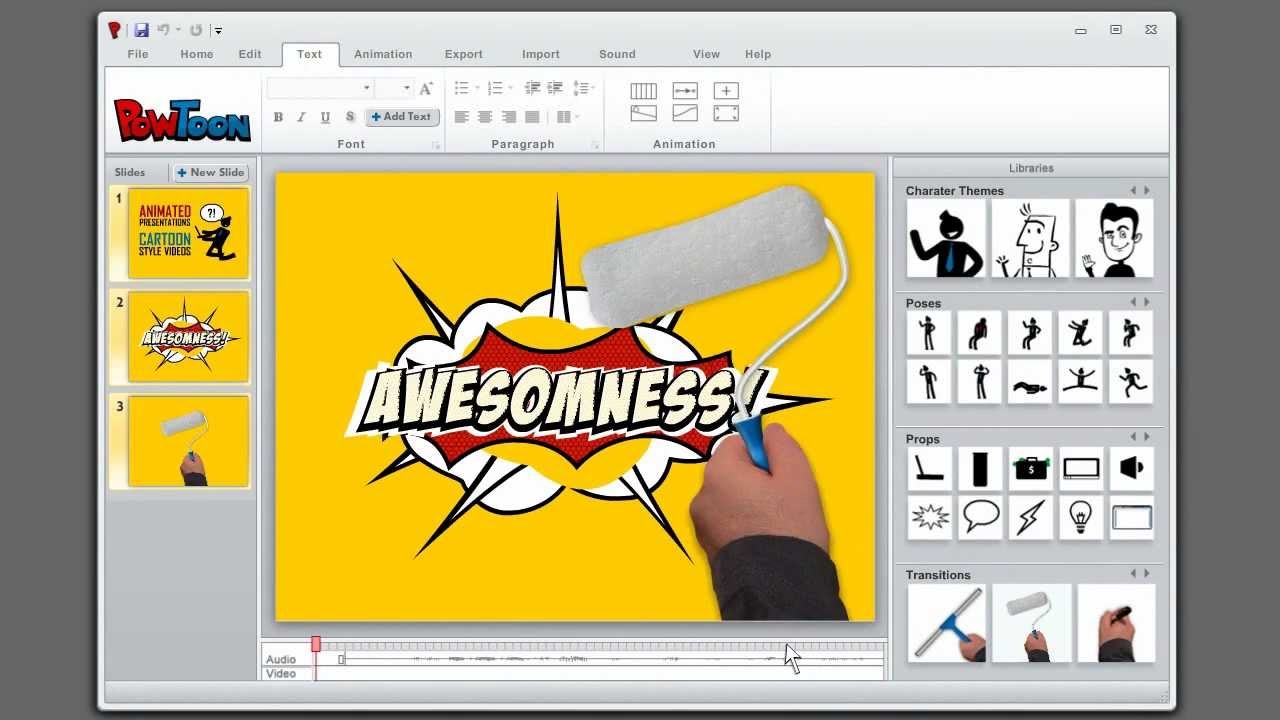
We started our class on this week with Powtoon presentation which presented by Rosnani and Shafiza Hanim. That is my first experience with Powtoon and it really the first genuine thing I would called awesome. 

The first thing we have created our own account and now we are ready to have fun with Powtoon. I check out some of Powtoon tutorials at http://www.powtoon.com/tutorials/ on how to create Powtoon before I get started.  

I think this Powtoon will make a difference in our education because this tool is designed to create content that is visually engaging, captivating and fun to make. 

During the class session, all of us have fun with new experience by using Powtoon.


Week 2

Date: 14th March 2015


We have learnt to build our own blog and be used as a site for e-Portfolio assignment. Honestly, even so I never got involved by using this software. This is my first time for me. Feel very exciting.

Blogspot has been presented by Norhuda and Siti Fasihah. The presentation on that day is quite nice and all the members showed their interest to make the blog. 


As a overall, we need to explore more and more deeper how to make a complete blog. 


Week 1


Google Drive

This week is the first class session for subject Technology and Innovation in Teaching and Learning Chemistry (SKP 6024) taught by Cik Hajah Asmayati Yahaya. We are given some brief explaination about tasks for this course that need to be completed.

Hajah also introduced us an application which is Google Drive. Google Drive is a file storage and synchronization service created by Google. It allows to store files in the cloud, share files and edit documents, spreadsheets, and presentations with collaborators. It encompasses Google Docs, Google Form, and Google Slides.

We were asked to share our opinions or reflections on the issues posted to the Online Forum in MyGuru2. Our participation in this online forum will be assessed.

Overall, this subject requires us as students to engage in Google Drive applications and other applications.

Saturday, 25 April 2015

TO MY LECTURER ; DR ASMAYATI YAHAYA


Dear Dr. Asmayati Yahaya, thank you for being  an excellent educator!  We know lecturer  like you are not easy to find. I appreciate your time, your patience, your ability to make a SKP6024( Technology and Innovation In Teaching and Learning Chemistry  course interesting, and your smile.

 I am grateful to you for introducing many ICT application and software in Teaching and Learning chemistry. It will be a priceless asset that you have given to me to improve my teaching skills and make my lesson interesting. As a teacher I believe that I need to do my best to keep technology in my classroom by incorporating it in all my curriculums. I hope the creativity  that you have cultivated in me will make me success and achieve my objective.

Your compliments and encouragement have always been important to me.
Thank you for being  genuine. Thank you for seeing me as a partner in learning and sharing. Thank you for being you. Thank you for being one of the few great lectures out there. May you inspire others to achieve the greatness you have.


Thank You....

Wednesday, 22 April 2015

Elements


An element is a pure substance that is made from a single type of atom. Elements are the building blocks for all the rest of the matter in the world. Examples of elements include iron, oxygen, hydrogen, gold, and helium. 

Atomic Number 

An important number in an element is the atomic number. This is the number of protons in each atom. Each element has a unique atomic number. Hydrogen is the first element and has one proton, so it has an atomic number of 1. Gold has 79 protons in each atom and has an atomic number of 79. Elements in their standard state also have the same number of electrons as protons. 


Silicon (Atomic number 14) is an important element in electronics


Forms of an Element 

Even though elements are all made from the same type of atoms, they can still come in different forms. Depending on their temperature they can be solid, liquid, or gas. They can also take different forms depending on how tightly the atoms are packed together. Scientists call these allotropes. One example of this is carbon. Depending on how carbon atoms fit together they can form diamond, coal, or graphite.

How many elements are there? 

There are currently 118 known elements. Of these, only 94 are thought to naturally exist on Earth. 

Families of Elements 

Elements are sometimes grouped together because they have similar properties. Here a few of the types: 

Noble Gases - Helium, neon, argon, krypton, xenon, and radon are all noble gases. They are unique in that the outer shell of their atoms is full of electrons. This means they don't react much with other elements. They are often used in signs as they glow in bright colors when an electrical current is passed through them. 

Alkali Metals - These elements have just 1 electron in the outer shell of their atom and are very reactive. Some examples are lithium, sodium, and potassium. 

Other groups include transition metals, nonmetals, halogens, alkali earth metals, actinides, and lanthanides. 

Periodic Table 

An important way of learning and understanding elements for chemistry is the periodic table. You can learn more about this on our periodic table of elements page. 


Periodic Table of Elements


Fun Facts about Elements
  • Elements found on Earth and Mars are exactly the same.
  • Hydrogen is the most common element found in the universe. It is also the lightest element.
  • Isotopes are atoms of the same element, with different numbers of neutrons.
  • In ancient times the elements referred to fire, earth, water, and air.
  • Helium is the second most common element in the universe, but is very rare on the Earth.

Acids and Bases

Acids and bases are two special kinds of chemicals. Almost all liquids are either acids or bases to some degree. Whether a liquid is an acid or base depends on the type of ions in it. If it has a lot ofhydrogen ions, then it is an acid. If it has a lot of hydroxide ions, then it is a base. 

pH Scale 

Scientists use something called a pH scale to measure how acidic or basic a liquid is. pH is a number from 0 to 14. From 0 to 7 are acids, with 0 being the strongest. From 7 to 14 are bases with 14 being the strongest base. If a liquid has a pH of 7, it's neutral. This would be something like distilled water. 


Strong Acids and Bases 

Acids with a low pH of around 1 are very reactive and can be dangerous. The same is true for bases of a pH near 13. Chemists use strong acids and bases to get chemical reactions in the lab. Although they can be dangerous, these strong chemicals can also be helpful to us. 


*** Never handle acids or bases in a chemistry lab unless supervised by your teacher. They can be very dangerous and can burn your skin.


Acids and Bases in Nature 

There are many strong acids and bases in nature. Some of them are dangerous and used as poisons by insects and animals. Some are helpful. Many plants have acids and bases in their leaves, seeds, or even their sap. Citrus fruits like lemons and oranges have citric acid in their juice. This is what makes lemons taste so sour. 

Acids and Bases in our Bodies 

Our bodies use acids and bases too. Our stomachs use hydrochloric acid to help digest foods. This strong acid also kills bacteria and helps to keep us from getting sick. Our muscles produce lactic acid when we exercise. Also, our pancreas uses a base called an alkali to help with digestion. These are just a few examples of how the chemistry of bases and acids help our bodies function. 

Other Uses 

Science and technology makes good use of acids and bases. Car batteries use a strong acid called sulphuric acid. Chemical reactions between the acid and lead plates in the battery help make electricity to start the car. They are also used in many household cleaning products, baking soda, and to make fertilizer for crops. 

Fun Facts
  • Acids and bases can help neutralize each other.
  • Acids turn litmus paper red, bases turn it blue.
  • Strong bases can be slippery and slimy feeling.
  • Acids taste sour, bases taste bitter.
  • Proteins are made up of amino acids.
  • Vitamin C is also an acid called ascorbic acid.
  • Ammonia is a base chemical.

What are crystals?


Crystals are a special kind of solid material where the molecules fit together in a repeating pattern. This pattern causes the material to form all sorts of unique shapes. 


Amethyst Crystal


How do they form? 

The process of crystal forming is called crystallization. Crystals often form in nature when liquids cool and start to harden. Certain molecules in the liquid gather together as they attempt to become stable. They do this in a uniform and repeating pattern that forms the crystal. 

In nature, crystals can form when liquid rock, called magma, cools. If it cools slowly, then crystals may form. Many valuable crystals such as diamonds, rubies, and emeralds form this way. 

Another way crystals form is when water evaporates from a mixture. Salt crystals often form as salt water evaporates. 

What unique properties do crystals have? 

Crystals can have very flat surfaces called facets. They can form geometric shapes such as triangles, rectangles, and squares. The shapes are a direct result of the type of molecules and atoms that make up the crystal. Smaller crystals and larger crystals that were formed of the same molecules and in the same method should have similar shapes. 

There are seven basic crystal shapes, also called lattices. They are Cubic, Trigonal, Triclinic, Orthorhombic, Hexagonal, Tetragonal, and Monoclinic. 

Interesting Types of Crystals 

Snowflakes - Snowflakes are ice crystals that are formed high in the clouds when water freezes. They always have six sides or arms, but every one of them is unique. 


Timing crystals - When an electric current is sent through some crystals they vibrate at a very precise frequency. Quartz crystals are used in watches and other electronics to keep an accurate time. 

Quartz - Quartz is a common mineral and crystal. It is one of the hardest common minerals. The gemstone amethyst is a purple type of quartz. 

Diamonds - Diamonds are one of the most valuable minerals on Earth. Not only for jewelry, but diamond is also the hardest substance on earth and is used for special tools such as diamond saws. Diamond is a form of the element carbon. 

Fun facts About Crystals
  • Crystallography is the science of studying crystals and how they form.
  • Some crystals, like diamonds, are really just one giant molecule made from lots of atoms of a single element.
  • A lot of computer screens use liquid crystals for their display.
  • They are very popular in jewelry because they can sparkle and come in many different colors.
  • Some living organisms are able to produce crystals.

Separating Mixtures


Many of the substances we use everyday were actually once part of a mixture. Someone somewhere separated that substance from the mixture so we could use it. It turns out that many compounds and elements aren't found in nature in their pure form, but are found as parts of mixtures. Separating substances from mixtures is an important part of chemistry and modern industry. 

Some important chemistry terms are used in this section including mixtures, suspensions, andsolutions. You can click on the links to learn more about each of them. 

Why do we want to separate mixtures? 

All the way back to Ancient History, industrious humans have separated mixtures in order to obtain the specific substances that they need. One example of this is extracting metal from ore in order to make tools and weapons. We'll discuss some other examples of separation below. 

Separation Processes 

The way in which different substances in a mixture are separated is called a process. There are a number of different processes used for separation. Many of them are very complex and involve dangerous chemicals or high temperatures. A lot of important industries in the world today are based on separation processes. 

Filtration 

One common method of separation is filtration. Filters are used everywhere. We use them in our houses to filter dust and mites out of the air we breathe. We use them to filter impurities from our water. We even have filters in our bodies such as our kidneys which act as filters to get bad stuff out of our blood. 

The filtration process is generally used to separate a suspension mixture where small solid particles are suspended in liquid or air. In the case of filtering water, the water is forced through a paper that is made up of a very fine mesh of fibers. The water that has been run through the filter is called the filtrate. The particles that are removed from the water by the filter are called the residue. 


Filtration diagram showing residue and filtrate

Distillation 

Another common separation process is called distillation. Distillation uses boiling to separate mixtures of liquid solutions. It takes into account that different substances in the mixture will have different boiling points. 

For example, if you heat salt water the water in the solution will boil before the salt. The water will then evaporate leaving the salt behind. If the steam from the water is collected it will turn back into liquid as it cools. This cooled water will be pure water without any salt. 


Centrifuge

In some cases, there are suspension mixtures where the solid particles are too fine to be separated with a filter. In these cases, sometimes a centrifuge is used. Centrifuges are mechanical devices that spin at very high speeds. These high speeds allow the solid particles in suspensions to settle very quickly. For example, rather than wait for sand to slowly settle to the bottom of water, a centrifuge can cause the sand to settle in a matter of seconds.

Some examples of how centrifuges are used include separating blood into plasma and red cells, separating cream from milk, and separating uranium isotopes for nuclear power plants.

The heavier particles move to the outside
of the cylinder as the centrifuge spins
allowing the mixture to be separated.

Other Processes 

There are many other separation processes such as sublimation, adsorption, crystallization, and chromatography. Sometimes it takes many stages of processes to get to the final result. One example of this is the processing of crude oil. Crude oil uses many levels of fractional distillation to produce a number of different products including gasoline, jet fuel, propane gas, and heating oil. 

Interesting Facts about Separating Mixtures
  • To separate liquid solutions where the substances have similar boiling points, a more complex version of distillation is used called fractional distillation.
  • Painting uses the separation process of evaporation. The wet paint is a mixture of color pigment and a solvent. When the solvent dries and evaporates, only the color pigment is left.
  • The separation process of winnowing was used in ancient cultures to separate the grain from the chaff. They would throw the mixture into the air and the wind would blow away the lighter chaff, leaving the heavier grain.
  • High speed centrifuges can spin up to 30,000 times a minute.
  • Many separation processes are occurring constantly in nature.

Melting and Boiling


As we learned in solids, liquids, and gases all matter exists in certain states or phases. Water can be liquid water, solid ice, or gas vapor. It's still all water, however, and made up of molecules of 2 hydrogen atoms and 1 oxygen atom (H2O). 


Lava is melted or liquid rock


Melting and Freezing 

When a solid turns into a liquid it is called melting. There is a temperature at which this happens called the melting point. As the energy in the molecules increases from a rise in temperature, the molecules start moving faster. Soon they have enough energy to break free of their rigid structure and start moving around more easily. The matter becomes a liquid. The melting point for water is 0 degrees C (32 degrees F). 

When the opposite happens and a liquid turns into a solid, it is called freezing. 

Boiling and Condensation 

When a liquid becomes a gas it is called boiling or vaporization. Again, at a certain temperature called the boiling point, the molecules will gain enough energy to break free and become a gas. The boiling point for water is 100 degrees C (212 degrees F).


Hot gas from steam engine condensating


When the opposite occurs and a gas becomes a liquid, it is called condensation. 

Evaporation 

Evaporation is liquid becoming a gas that happens only on the surface of a liquid. Evaporation doesn't always need a high temperature to occur. Even though the overall energy and temperature of a liquid may be low, the molecules on the surface that are in contact with the air and gases around them, can be high energy. These molecules on the surface will slowly become gases through evaporation. You can see evaporation when water on your skin dries or a puddle in the street slowly goes away. 

Standard State 

Scientist use the term "standard state" to describe the state an element or substance is in at "room conditions" of 25 degrees C and one atmosphere of air pressure. Most of the elements, like gold and iron, are solids in their standard state. Only two elements are liquid in their standard states: mercury and bromine. Some of the elements that are gases in their natural state include hydrogen, oxygen, nitrogen, and the noble gases. 

Fun facts about Melting and Boiling
  • When rocks get really hot they turn into a liquid called magma or lava.
  • Gas can be turned into a liquid through pressure. By squeezing all the gas molecules tightly together a gas can become liquid.
  • We use natural gas in our homes in its gas state, but when it's shipped in ocean tankers it's shipped in a liquid state to save on space.
  • Mercury has the interesting properties of being both a metal and a liquid in its standard state

Solids, Liquids, and Gases


We learned in some of our other lessons that matter is made up of atoms and molecules. Millions and millions of these tiny objects fit together to form larger things like animals and planets and cars. Matter includes the water we drink, the air we breathe, and the chair we are sitting on. 

States or Phases 

Matter usually exists in one of three states or phases: solid, liquid, or gas. The chair you are sitting on is a solid, the water you drink is liquid, and the air you breathe is a gas. 

Changing State 

The atoms and molecules don't change, but the way they move about does. Water, for example, is always made up of two hydrogen atoms and one oxygen atom. However, it can take the state of liquid, solid (ice), and gas (steam). Matter changes state when more energy gets added to it. Energy is often added in the form of heat or pressure. 

Water 

Solid water is called ice. This is water with the lowest energy and temperature. When solid, the molecules in water are held tightly together and don't move easily. 

Liquid water is just called water. As ice heats up it will change phases to liquid water. Liquid molecules are looser and can move about easily. 

Gas water is called steam or vapor. When water boils it will turn to vapor. These molecules are hotter, looser, and moving faster than the liquid molecules. They are more spread apart and can be compressed or squished.
 
The three states of Water

More States 

There are actually two more states or phases that matter can take, but we don't see them much in our everyday life. 

One is called plasma. Plasma occurs at very high temperatures and can be found in stars and lightning bolts. Plasma is like gas, but the molecules have lost some electrons and become ions. 

Another state has the fancy name Bose-Einstein condensates. This state can occur at super low temperatures.